











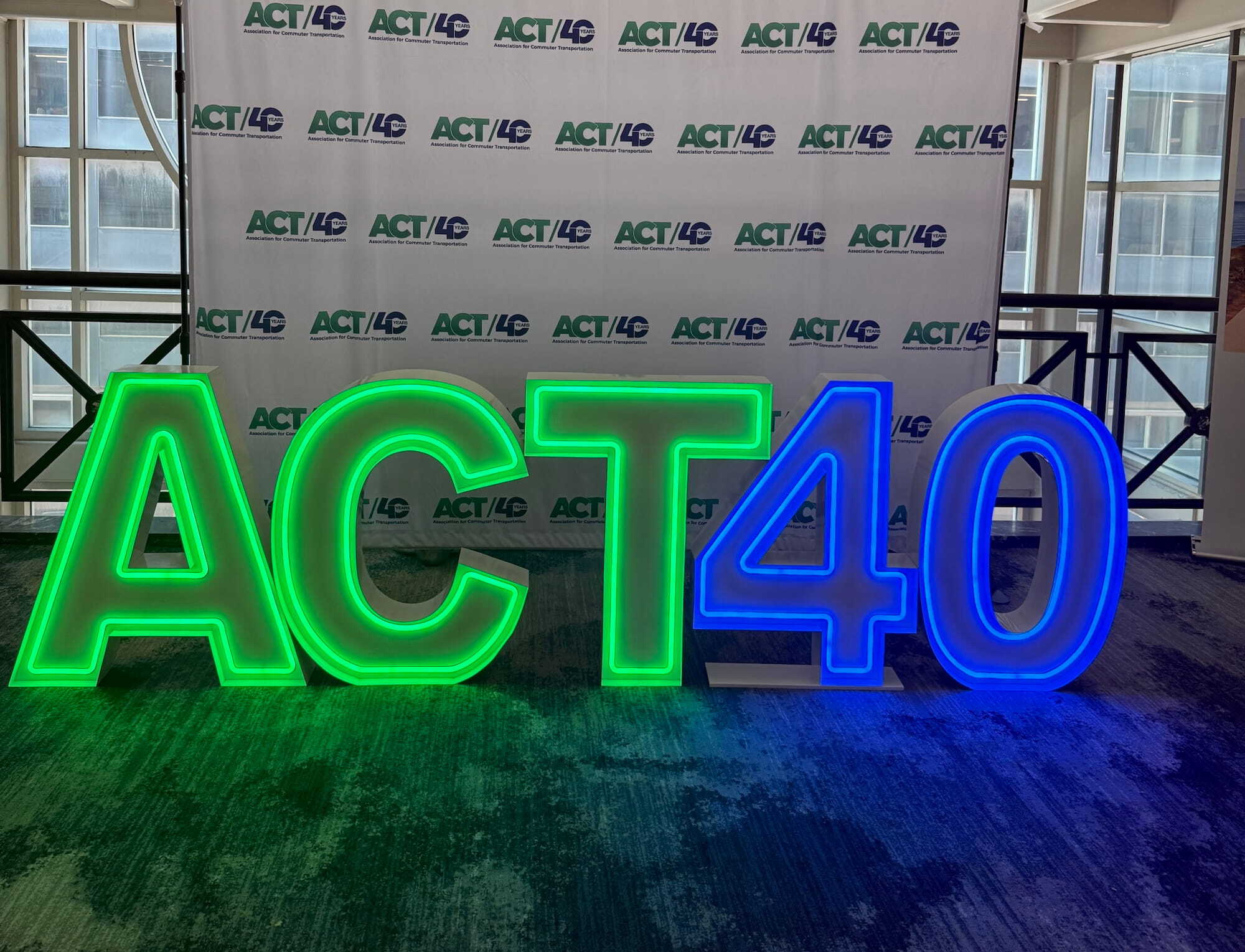
The Association of Commuter Transportation conference was action packed. If you weren’t able to be there – or were there and your head is still spinning – I’d love to recap what our team heard and what we learned in our time together.
Our top learnings from ACT
 🔴 One of the strongest themes we heard at ACT 2026 was that employers are increasingly looking beyond program participation and asking a more important question: Is the benefit actually influencing commuter behavior?
Organizations are becoming more focused on outcomes, such as improving the employee experience, supporting in-office attendance, reducing parking demand, advancing sustainability goals and helping employees adapt to workplace changes. This aligns with a broader shift toward measuring not just enrollment, but whether employees ultimately use the benefit.
🔴 Employers continue to look for ways to make commuting easier and more attractive for employees.
Whether through pre-tax benefits, employer-funded subsidies, vanpool programs, transit incentives or micromobility options, the focus remains on reducing friction and improving the daily commute experience for employees with diverse transportation needs.
🔴 We heard practical discussions around incentives and program design. The most successful commuter programs are not one-size-fits-all.
Organizations are evaluating how commuter benefits, subsidies, parking policies and workplace initiatives can work together to support broader goals while meeting employees where they are.
🔴 Collaboration remains critical. Many of the most successful programs leverage the expertise of transportation demand management organizations (TMAs), transit agencies, mobility providers and commuter benefits specialists.
These partnerships can help employers better understand local commuting patterns, identify opportunities for improvement, and connect employees with resources that make commuting easier and more sustainable.
🔴 As workplace strategies continue to evolve, employers are looking for commuter programs that are both effective and easy to administer.
The challenge is balancing flexibility for employees with simple administration, clear communication and measurable results that demonstrate the value of the program over time.
The questions you had for us
 Q: Should we consider offering a commuter subsidy?
A: There is no one-size-fits-all answer. Some employers offer a pre-tax benefit only, while others choose to supplement it with a subsidy. The most successful programs typically start by defining a desired outcome and then evaluating whether a subsidy, targeted communications, parking policies or other strategies can help support that objective. The key is aligning the investment with a measurable business need.
Q: How do you support alternate transportation choices (micromobility, vanpools, etc.)?
A: Supporting a successful commuter program often means helping employees choose from a variety of transportation options, not just transit or parking. Edenred works with hundreds of transit providers across the country and supports a wide range of eligible commuting expenses, including vanpools, ferries, bike sharing, e-scooters and other qualified transportation services. We also recognize that no single organization solves commuting challenges alone.
Throughout ACT, we heard the importance of partnerships between employers, commuter benefits providers, TMAs, transit agencies and mobility companies. Organizations such as RidePanda are helping employers better understand commuting patterns and encourage alternative transportation choices, while commuter benefits help employees pay for those trips using tax-advantaged dollars. Together, these partnerships can help employers improve mode split, reduce parking demand and create a better commuting experience for employees.
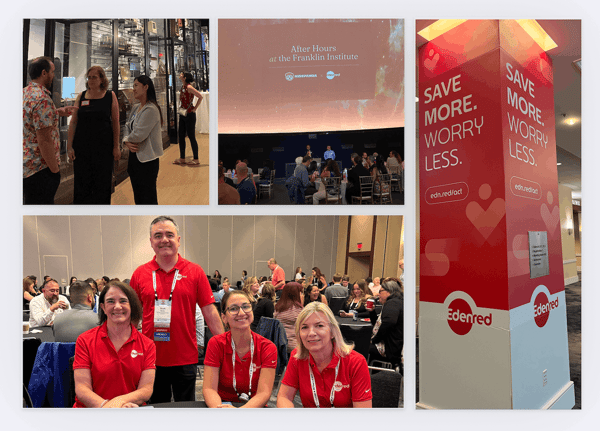
Our favorite part? Seeing our team representing Edenred in Philadelphia
One of the things we enjoy most about ACT each year is the opportunity to learn from transportation demand management professionals, transit agencies, mobility providers, employers and advocates who spend their careers thinking about how people move. Whether the conversation is about office attendance, parking demand, employee experience, mode split, or sustainability, we leave every conference with new ideas and a deeper appreciation for the complexity of the daily commute.
A quote from day-one keynote speaker Andy Boenau, Director of Transportation for the City of Richmond, Virginia, stuck with us throughout the conference:
Humans are feeling creatures that sometimes think.
That idea surfaced again and again in conversations about commuting. Data, incentives, technology and policy all matter, but successful programs ultimately have to work for real people making real decisions about how they get to work each day.
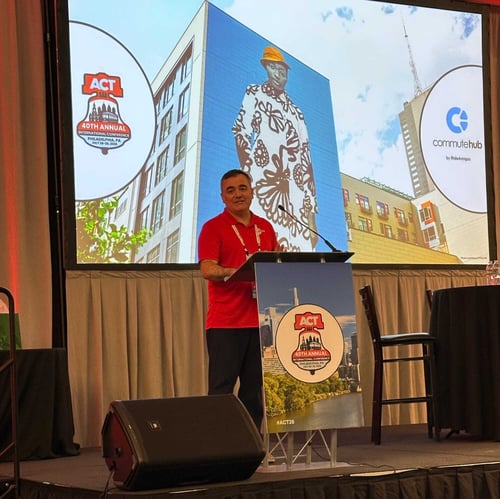
 We were also proud to share Edenred’s perspective during our Sponsor Showcase session, where Scott Burke discussed the importance of looking beyond enrollment and understanding whether commuter benefits are actually influencing behavior. The response reinforced something we heard throughout the conference: Employers are looking for practical ways to improve the commute experience and achieve meaningful outcomes for their workforce.
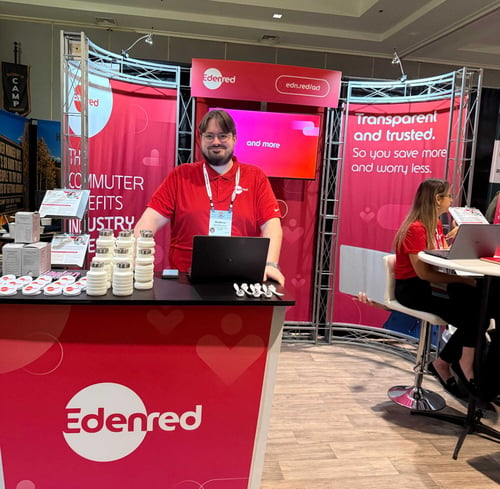
Of course, we also enjoyed reconnecting with familiar faces and meeting new partners throughout the week, from our booth and evening event with RidePanda to the many conversations that continued long after the sessions ended. ACT is a reminder that successful commuter programs are rarely built alone. They are shaped through collaboration between employers, TMAs, transit agencies, mobility partners, commuter benefits providers and the employees they serve.
Learn more about how Edenred can support your employees on their daily commute.